



INTERVIEW: An Unarrived Hello
[ Exclusive Interview ] ARTIST: monouno
1. From installation art that captures emotions in a single frozen moment, to furniture pieces that exude a spirit of wabi-sabi, your creative path has evolved organically. What was the turning point that led you to establish monouno together? And when the brand first took shape, how did you outline its earliest contours and direction?
monouno: The brand began simply because we made a few things for ourselves and those objects that felt very “us” and that eventually led to the birth of monouno. The brand often revolves around reflecting on the current time and space we inhabit: What are we paying attention to? From artistic creation and functional objects to spatial thinking and materials, various states and stimuli allow us to break away from our usual logic. monouno gives us, who were already creating individually, a way to periodically step back and provide a flexible rhythm of contraction and expansion. Our hope from the beginning was not to be easily defined. It might be hard for people who know us to “introduce” what we are, but that allows monouno to move freely between different places.
2. Both of you are artists. Between individual creation and collaborative work, there must be shifts in mindset and emotional states. Could you share how these two modes differ for you? And have there been any interesting or memorable moments during your collaboration?
monouno: Creation ultimately returns to a deeply personal place. Our ways of thinking are quite different. We often choose opposite directions, but that contrast becomes complementary. And it’s not just the two of us; as more people join the team, they bring new perspectives. The friction, resonance, communication, and execution all stimulate one another continuously.
3. Modern consumers look for more than aesthetics. They also expect functionality. When facing this demand, how do you determine the moment when you’ve reached the “perfect balance” during the creative process? Could you share your thinking and approach to navigating these two aspects?
monouno: Daily life needs small breakthroughs—tiny shifts in an otherwise routine rhythm. When designing, we try to give an object a slight shift in its original “identity.” That subtle shift becomes very important and perhaps that’s where the balance emerges.
4. monouno often centers its creations around stainless steel. Where does this fondness for “metal” come from? Was it inspired in any way by Xu’s father’s life in a steel factory? In your creative journey, are there materials you tend to avoid, or materials you’ve wanted to explore but haven’t fully ventured into yet?
monouno: I don’t feel particularly influenced by my family’s profession, more by the way they approach things. I’m personally interested in the characteristics and relationships of materials, and I look for a way to “speak” through them, whether in art or everyday objects. We hope to bring more materials into the work in the future, to reflect different stages of who we are. Another important aspect is the collision and merging of different materials that find unique ways to present them.
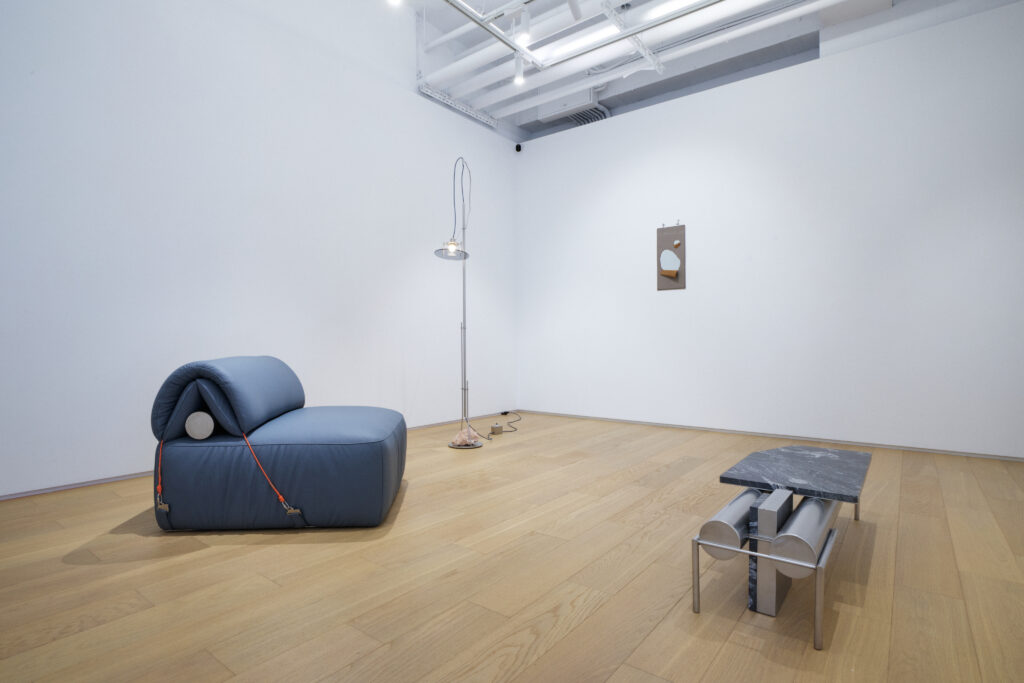
5. As a furniture-art brand, monouno has developed a strong aesthetic identity defined by simplicity and subtle distinctiveness. Where do your design inspirations usually come from? Could you talk more about your overall creative thought process?
monouno: Defining a “style” has never been our primary starting point, nor something that can be pinned down in a short moment. What we value more is how monouno, over time and through gradual shifts, reveals different states of living. Inspiration often comes from conversations, wandering around, and everyday encounters.
6. In a previous interview, you mentioned that monouno’s creations are “questions posed to the material world, and a pursuit of its spirituality.” This starting point tightly connects your work with the essence of the brand. Among all your pieces, is there one whose design concept or making process is closely tied to a particular life stage or emotional turning point that serves as a self-portrait of that moment?
monouno: Each time the team forms in different environments and with different members, everyone brings their own views on materiality and spirituality. The ideas formed in those collisions are always distinct. Perhaps when we look back after more time has passed, we’ll be able to trace how each period corresponds to who we were.
7. From your artworks to your exhibition visuals, one can sense your meticulous attention to detail while still maintaining a sense of ease, as though there is always intentional breathing room. We’re curious: How do you distinguish the style and positioning of your individual practices from monouno, while still maintaining a shared sensibility?
monouno: Our mutual understanding is that we don’t need to be recognized under a fixed identity. That gives us a sense of freedom, like the undefined “space” of this exhibition. Who is the work for? In what dimension does communication occur? Within the boundaries we set, we simply find where we stand—that moment is enough. The materials we use are often approached through direct sensory experience, and maintaining that looseness is important, so things don’t become rigid.
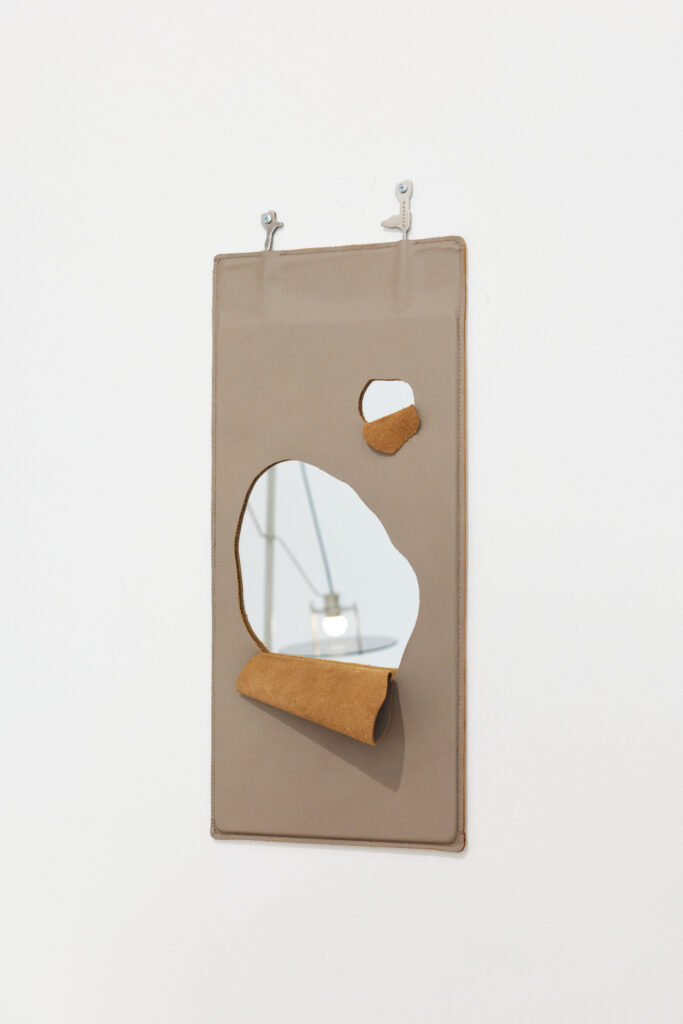

8. In your pursuit of extreme simplicity, how does monouno practice the philosophy of “subtraction”? What elements do you decide to remove, and which craft details are non-negotiable? Could you share a concrete example of a “trade-off” made for the sake of simplicity?
monouno: Addition and subtraction are often the result of ongoing negotiation, and the method emerges from discussions during collaboration. Fine-tuning is our focus, and also what makes the process interesting.
9. For consumers or visitors encountering monouno for the first time, what is the core message or spirit you hope they grasp in that very first moment?
monouno: “Hmm… how should I define this?”It may resemble a certain form, yet branch away from it in subtle ways.
10. Many of monouno’s works are furniture. Objects that dwell with people and accumulate traces of living over time. How do you view the relationship between your work and the marks of use, wear, and the passage of time? What role does this “sense of time” play in your creative philosophy?
monouno: Furniture confronts the proportions of the body directly. The traces of use become brushstrokes—layered, effortless, unintentional. That is life.